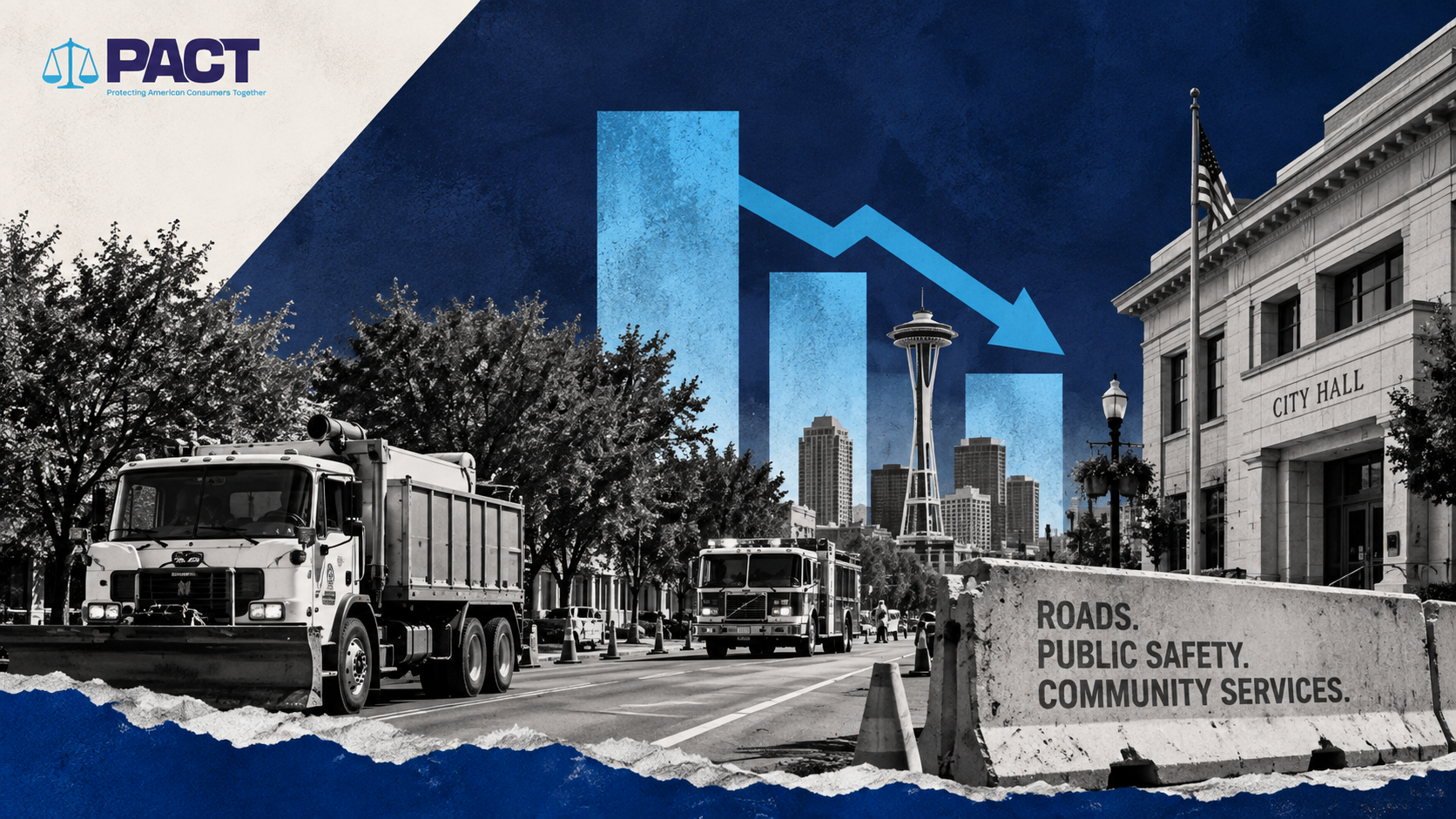
A growing number of officials across Washington State are raising the alarm on how litigation payouts are quietly draining taxpayer dollars meant for roads, public safety, and community services. These leaders are drawing a direct line between runaway litigation and the financial strain on local government. At a City of Newcastle Council meeting on September 15, 2026, City Manager Scott Pingle made clear where his priorities lie:
"We have to do something about liability costs in the state of Washington, and that's where the reform priority comes in."
His remarks were echoed by Council Member Ariana Sherlock, who underscored the real-world stakes for taxpayers. Sherlock noted that state legislators have not fully grasped the burden being placed on local governments, calling for bolder language and a sharper focus on a fundamental truth:
"When municipalities and cities have to pay out, that is taxpayer money."
When a city writes a check to settle a liability claim, it is not an abstract accounting entry. It is money that could have funded road repairs, public safety, or community services, redirected instead to litigation.
The concern raised in Newcastle is part of a much larger and growing crisis across Washington State. The state's lawsuit crisis is already draining public services at every level of government, and the state's $1.7 billion liability burden serves as a stark warning for consumers and communities alike. Washington's own Insurance Commissioner has warned that excessive litigation is draining the risk pool dry, putting pressure on the very systems designed to protect residents when things go wrong. Taken together, these are not isolated data points. They reflect a systemic problem that is compounding year over year, and municipalities are now speaking out because they are bearing the weight of it directly.
The pattern is familiar. Across the country, cities and states that have allowed litigation costs to spiral unchecked have seen insurance markets destabilize, public budgets erode, and consumers pay higher prices for everything from housing to healthcare. Washington is on that same trajectory, and city managers and council members are now saying so publicly. Lawmakers should take that signal seriously. Commonsense lawsuit abuse reform would lower costs for municipalities, return money to taxpayers, and restore balance to a legal system that is increasingly working against the communities it is meant to serve.