For years, third-party litigation funding has operated in the shadows of America’s civil justice system. It is a $15.2 billion industry with no meaningful oversight, no disclosure requirements, and no accountability to the consumers it too often exploits. That is beginning to change in a significant and accelerating way. In recent weeks, two landmark state actions have sent an unmistakable signal to policymakers across the country: the era of unchecked litigation finance is ending.
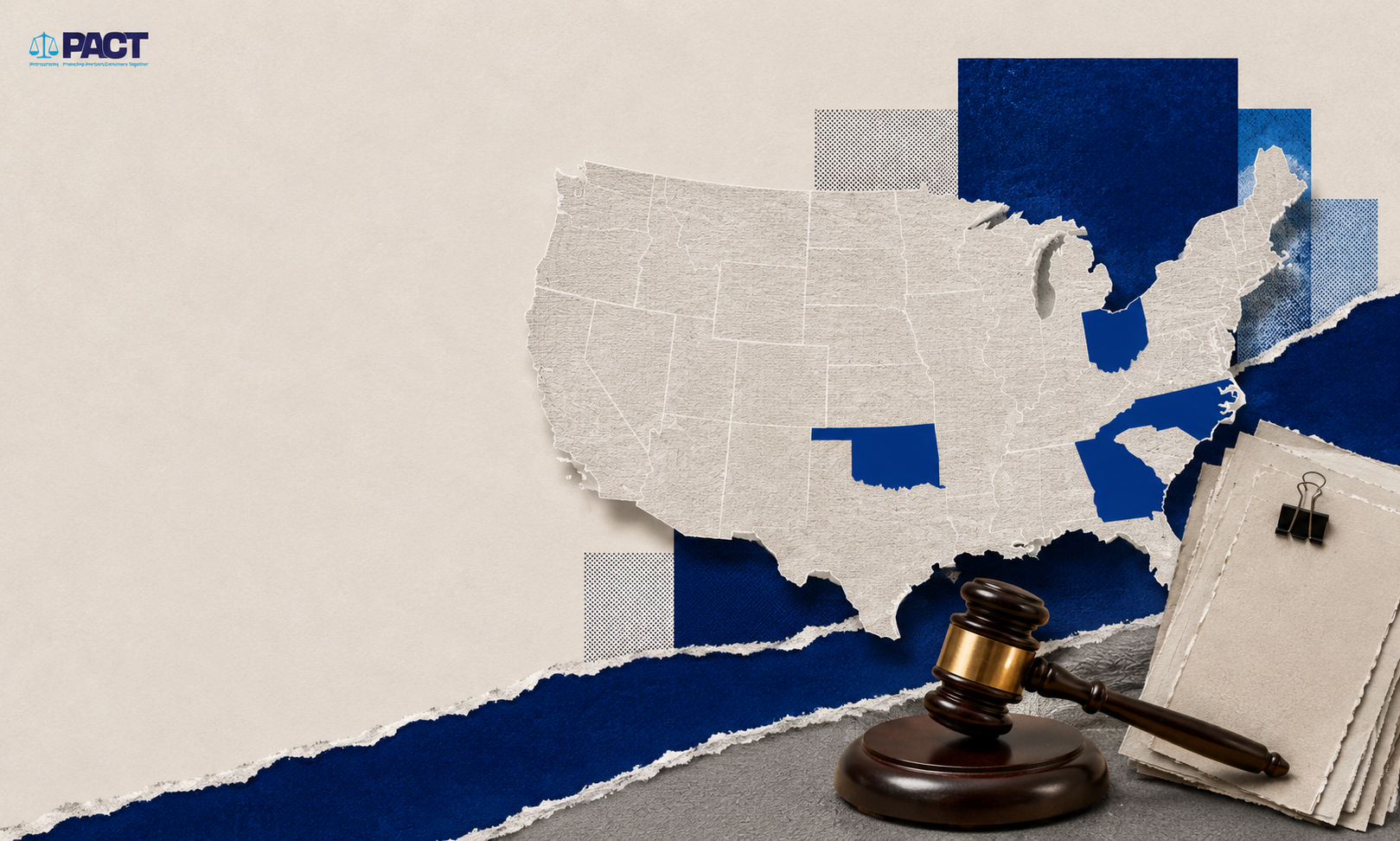
The first and most consequential development came out of North Carolina. On June 22, 2026, Governor Josh Stein, a Democrat, signed House Bill 315 into law, making North Carolina the first state in the nation to prohibit third-party litigation funding outright. The legislation passed with overwhelming bipartisan support, earning unanimous approval in the North Carolina House and near-unanimous support in the Senate.
The core argument behind North Carolina’s historic action is straightforward: lawsuits should be resolved based on the facts of a case and the interests of the parties involved, not the financial objectives of outside investors seeking a return. When litigation becomes a tradable asset class, the consumer is no longer the priority. The question North Carolina answered is one that every state legislature must now confront: what role, if any, should outside investors play in America’s civil justice system?
North Carolina has established a new benchmark in the national conversation. But it is not alone in acting.
Just this week, Ohio Governor Mike DeWine signed House Bill 105 into law, representing the latest in a series of state-level efforts to impose meaningful guardrails on the industry. Ohio’s law requires both commercial and consumer funders to register with the state and disclose certain funding agreements to the attorney general after cases are resolved. Critically, the law prohibits funders from influencing how lawsuits are handled or settled, bars referral fees to and from attorneys and medical providers, and prohibits funders from directing consumers to specific doctors or lawyers. As state Rep. Meredith Craig stated plainly: “The business of nonrecourse litigation funding has operated without guidelines for too long.”
Georgia and Oklahoma have already moved in the same direction. The Georgia Senate passed Senate Bill 69 in a unanimous 52-0 vote. Oklahoma’s House passed its Foreign Litigation Funding Prevention Act by an 88-2 margin, specifically targeting the national security dimension of the problem by requiring disclosure of whether foreign states or their instrumentalities are funding litigation in American courts.
What these reforms share is a recognition that the personal injury system, as currently structured in too many states, has created a closed loop in which lawyers, third-party funders, and medical providers all profit, often at the direct expense of the plaintiffs the system is supposed to serve. Dr. Benjamin Chavis, a leading civil rights voice, has called for commonsense reform that “reasonably caps interest rates and ensures transparency,” warning that without regulation, unscrupulous lenders can charge “as much as 200%” with no backstop for vulnerable consumers.
The momentum is now undeniable. North Carolina has shown that outright prohibition is politically achievable. Ohio has shown that comprehensive disclosure and consumer protection requirements can pass with broad support. Georgia and Oklahoma have shown that states across the ideological and geographic spectrum are willing to act. The question for every remaining state legislature is no longer whether to address third-party litigation funding; it is how boldly they are willing to do so. Policymakers who care about lowering costs for consumers, protecting injured plaintiffs from predatory financial arrangements, and preserving the integrity of the civil justice system should study what these four states have done and act accordingly.