Full story in Syracuse.com
By Lauren Zelt
New York’s auto insurance rates are sky high. Not “feels expensive.” Objectively expensive. Drivers pay just over $4,000 a year on average — roughly $1,500 more than the national average. That’s the price of participating in modern life in a state where driving isn’t optional outside of New York City.
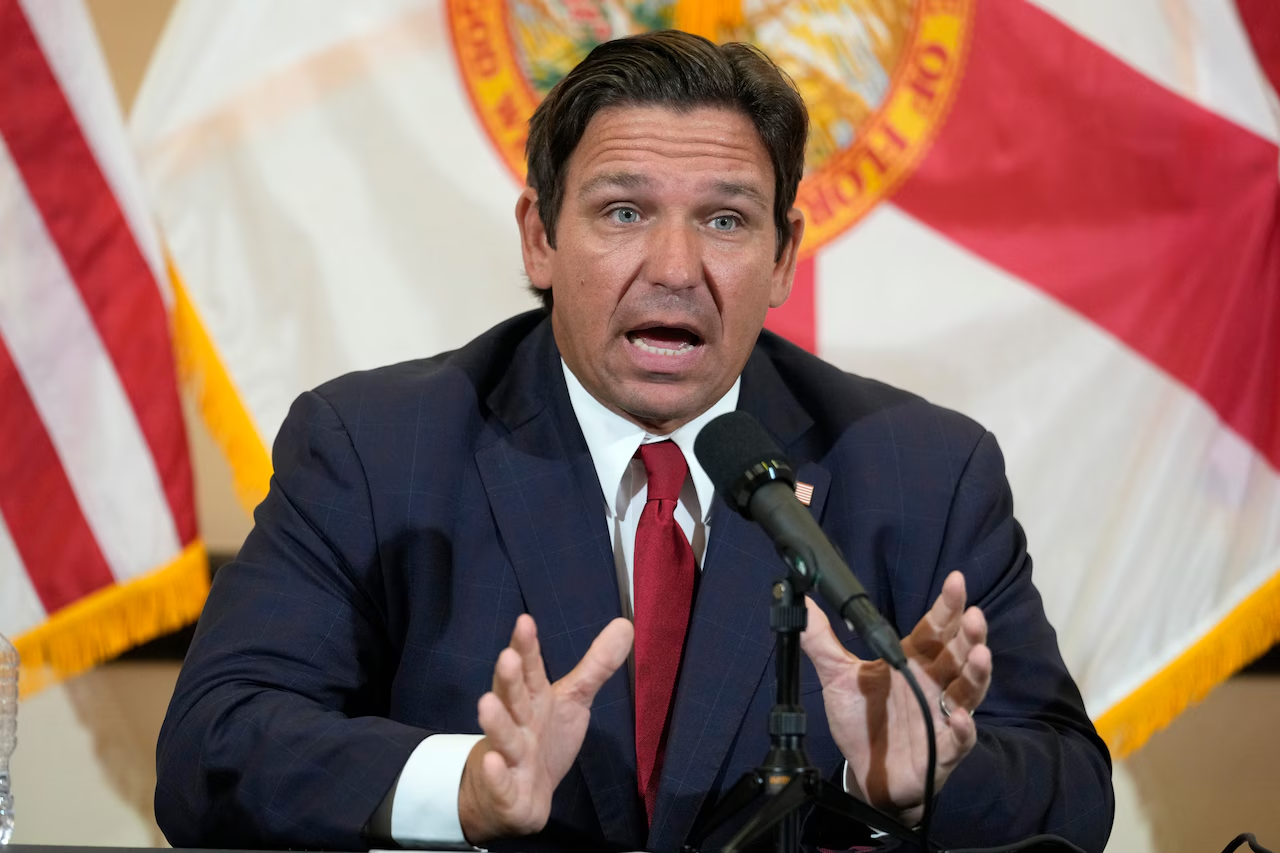
So when Gov. Kathy Hochul announced a plan to crack down on auto insurance fraud and lawsuit abuse earlier this year, you might have expected a broad sigh of relief. Instead, the trial lawyer lobby unloaded. The attacks were immediate. They reached for a familiar New York bogeyman: Florida Gov. Ron DeSantis.
Why bring him up at all? Because Florida passed lawsuit abuse reforms in 2023. And in New York politics, attaching DeSantis’s name to anything is an easy way to change the temperature of the room.
It was an attempt to change the subject — from the cost of coverage in New York to the politics of another state. To make it about anything other than the $4,000 auto insurance bill landing in millions of New Yorkers’ mailboxes.
But here’s the irony: Florida is exactly where the conversation should be focused.
A few years ago, Florida was the cautionary tale — litigation spiraling, premiums climbing, insurers leaving. In 2023, the state passed sweeping lawsuit abuse reforms aimed at tightening liability rules and curbing fraudulent and inflated claims. Since then, the numbers have shifted. Florida’s top five auto insurance companies — representing about 78% of the market — have filed for an average 6.5% rate reduction for 2025, reversing steep increases from prior years. Regulators have also announced nearly $1 billion in premium refunds for Progressive policyholders.
More than a billion dollars back to Florida drivers – just from one company.
Back in New York, state officials argue that cost drivers are hiding in plain sight: staged crashes, organized fraud rings, lawsuit loopholes and enforcement gaps. In 2023, there were 1,729 staged crashes reported in New York, ranking the state second nationally for staged-fraud incidents. Insurers reported 38,270 suspected motor vehicle insurance fraud cases to the state’s Insurance Frauds Bureau that year — another record high.
The structure of Hochul’s proposal reflects that reality. Go after the organizers of staged crashes, not just the drivers they recruit. Give insurers a fair window to investigate suspicious claims instead of forcing rapid payouts that are difficult to unwind. Clarify liability standards so minor injuries aren’t routinely escalated into high-dollar litigation under vague “serious injury” thresholds.
Voters seem to grasp that. A recent poll of 1,500 likely voters in three competitive New York congressional districts found 69% say their auto insurance premiums have increased in the past year. Ninety-five percent are bothered by the roughly $4,000 annual cost. Seventy-four percent support reforming lawsuit costs to reduce rates, while just 5% oppose it. Eighty-four percent say stopping lawsuit abuse and fraud is important, and 81% say they would be more likely to support a lawmaker who backs those reforms.
Reforming New York’s perpetual system of excessive litigation is not a narrow constituency. It’s broadly popular.
None of this requires New York to become Florida. It requires acknowledging a basic economic reality: When a system rewards excess litigation and tolerates organized fraud, you get more of both. And when you change the incentives, behavior changes with them.
Florida changed its incentives. Rates stabilized. Insurers cut premiums and sent more than $1 billion back to drivers.
New Yorkers are still opening renewal notices and wondering what exactly they’re paying for.
Hochul’s proposal doesn’t abolish lawsuits or strip legitimate victims of their day in court. It asks a more uncomfortable question: Should working families keep subsidizing a litigation-and-fraud pipeline, or should the system be recalibrated around the people actually paying the bills?
The politics may be noisy. But the numbers don’t lie.
Lauren Zelt is executive director of Protecting American Consumers Together (PACT), a nonprofit lobbying and educational organization dedicated to reforming the civil justice system.