Staged car crashes aren’t accidents. They’re premeditated schemes designed to defraud insurers and pass the costs on to everyday consumers. We’ve seen these repeatedly in New York from a Suffolk County court ruling exposing coordinated no-fault fraud rings to a federal RICO lawsuit against a Brooklyn attorney who orchestrated staged crashes at scale, this is an organized, deeply entrenched problem. New York is finally treating it that way.
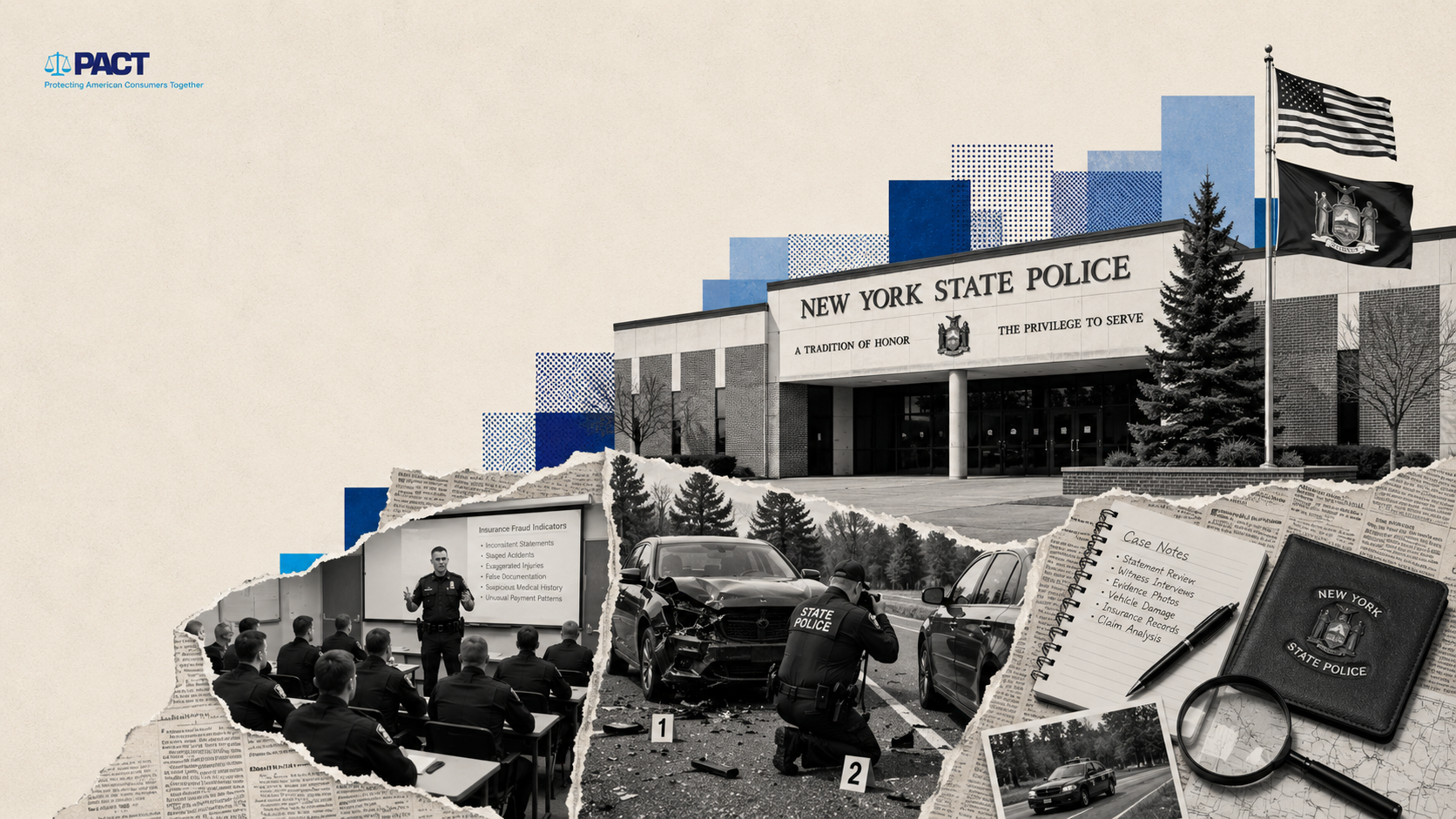
This week, nearly 270 law enforcement officials from more than 50 agencies gathered at the State Police Academy in Albany for a specialized symposium on insurance fraud detection. The numbers driving the training are alarming: DFS received more than 51,000 suspected fraud complaints in 2025, over 36,000 tied to no-fault auto insurance alone. The National Association of Insurance Commissioners estimates that fraud adds roughly $300 per year to the average American household’s insurance costs.
The training zeroed in on staged crashes, which state data shows numbered more than 1,700 suspected schemes in 2023. As DFS Deputy Superintendent Milton Yu explained, these aren’t fender-benders.
“You have somebody who had the premeditation to get behind the controls of a car and smash it into another person.”
“We don’t want to make any particular accusations based on a whim. …Through DFS’s experience and what we’ve seen from these accidents time and time again, we know exactly what to look for.”
Yu cited an estimate from the National Association of Insurance Commissioners that insurance fraud adds roughly $300 annually to the costs paid by a typical American household. He said fraud schemes often involve a series of smaller payments made over time rather than a single large claim.
State Police Superintendent Steven G. James furthered Yu’s sentiment.
“Auto insurance fraud is no minor crime. …The perpetrators are organized and deliberate, and it often intersects with other criminal activity.”
The reach extends well beyond the 270 in the room. Attendees will bring what they learned back to their agencies, and the curriculum is being permanently embedded into the State Police investigator school. New York’s recently enacted budget also expanded prosecutorial reach, allowing criminal charges against those who organize staged-accident rings, not just the drivers involved.
As Yu put it: “Once we intercede, we break that cycle.”