
A Brooklyn construction lawsuit filed in 2018 offers a revealing window into how the personal injury system can be manipulated through overlapping claimants, shared medical networks, and litigation financing that turns injury claims into financial instruments. The case is currently active after being reopened this year, and the pattern of facts embedded in its court record deserves public attention.
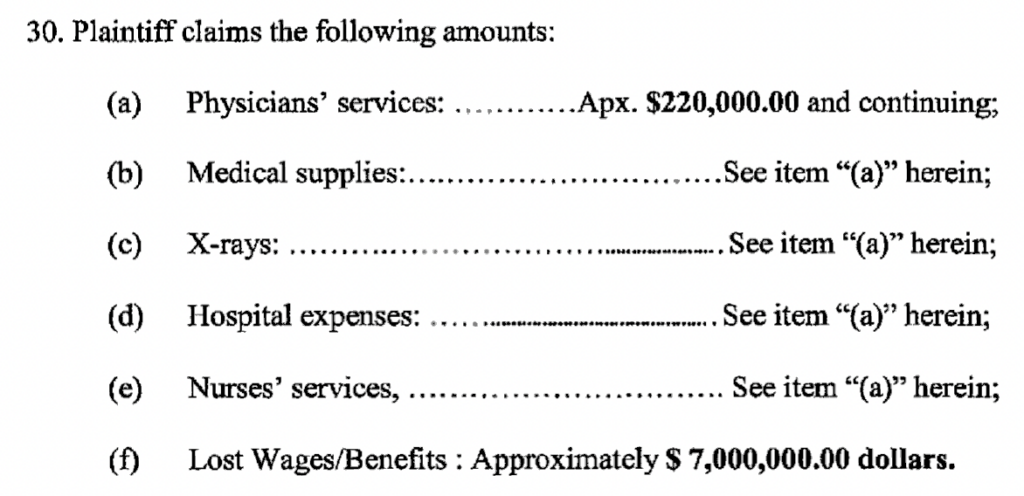
According to the verified complaint filed in Kings County Supreme Court, a construction worker alleged that in December 2017, while performing work at a Brooklyn jobsite, he “was caused to fall from an elevated height and sustain injuries to body and limb.” The bill of particulars listed injuries to his lumbar spine, left knee, right shoulder, and right wrist, with multiple surgeries performed by the same small group of doctors. Claimed damages included approximately $220,000 in physicians’ services and lost wages of “Approximately $7,000,000.00 dollars.”
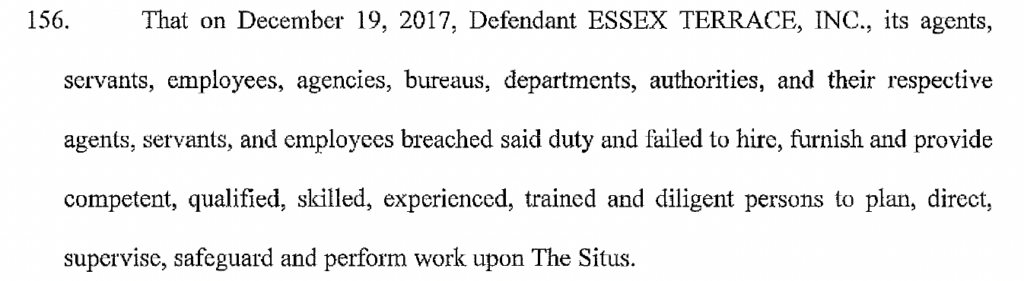
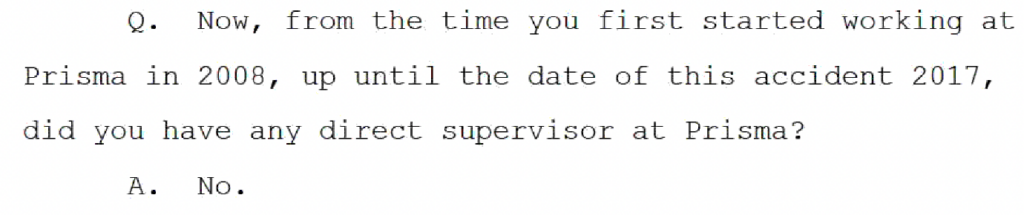
The defense challenged the foundation of the claim from the start. A corporate representative of the plaintiff’s employer testified that each trade on the project “had their own supervisor,” and that all attempts to reach the plaintiff following the incident were “not fruitful” because “he never returned any call.”

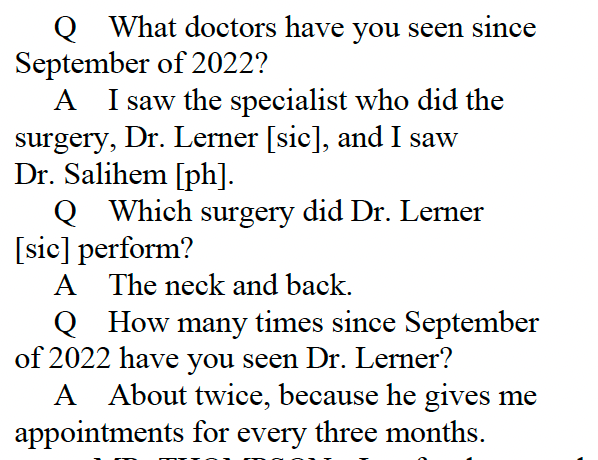
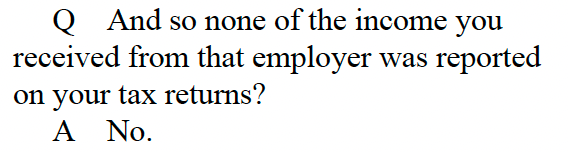
The case takes a more troubling turn when examining who plaintiff’s own counsel identified as eyewitnesses. Two men were named in a 2025 discovery exchange, consistent with employer testimony identifying the workers present on-site the day of the alleged accident. One of those named eyewitnesses is himself the plaintiff in a separate Kings County construction accident lawsuit. In his deposition in that case, he confirmed he was treated by the same surgeons who treated the original plaintiff, and that his physical therapy was conducted at the same Brooklyn facility listed in the original plaintiff’s own bill of particulars as one of his treatment locations. He also acknowledged that none of his construction income was reported on his tax returns.
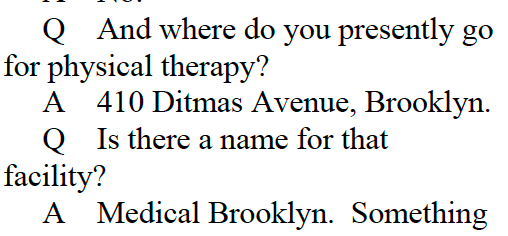
That shared treatment facility is not incidental. It is the same address at the center of a 170-page federal racketeering complaint filed in 2025 by a major insurer, which alleged that personal injury attorneys, medical providers, and litigation funders conspired to build a closed-loop system of diagnosis, surgery, and billing. That complaint described arrangements that “incentivize the prolonging of lawsuits and rendering of unnecessary care, often leaving Claimants as the party receiving the smallest portion of recovery.”
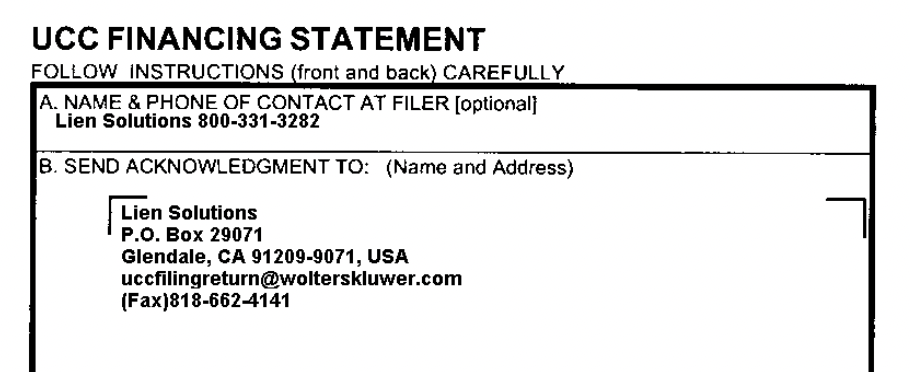
Layered on top of all of this is the financing. A UCC Financing Statement filed in the case identifies a third-party litigation funder as a secured party, with collateral described as the plaintiff’s personal injury claim arising from the incident, covering any recovery “against the defendants named in the lawsuits, or others.” The claim itself has been pledged as collateral before any verdict has been reached.


Viewed together, these facts describe a system engineered to generate claims rather than deliver justice. Policymakers must act. Requiring disclosure of third-party litigation financing agreements, cracking down on predatory medical referral networks, and mandating transparency around the financial relationships between attorneys, funders, and medical providers are the minimum necessary to ensure that the courthouse remains a place where real victims come first.