America's Lawsuit Epidemic Is Getting Worse. Here's What Reform Looks Like
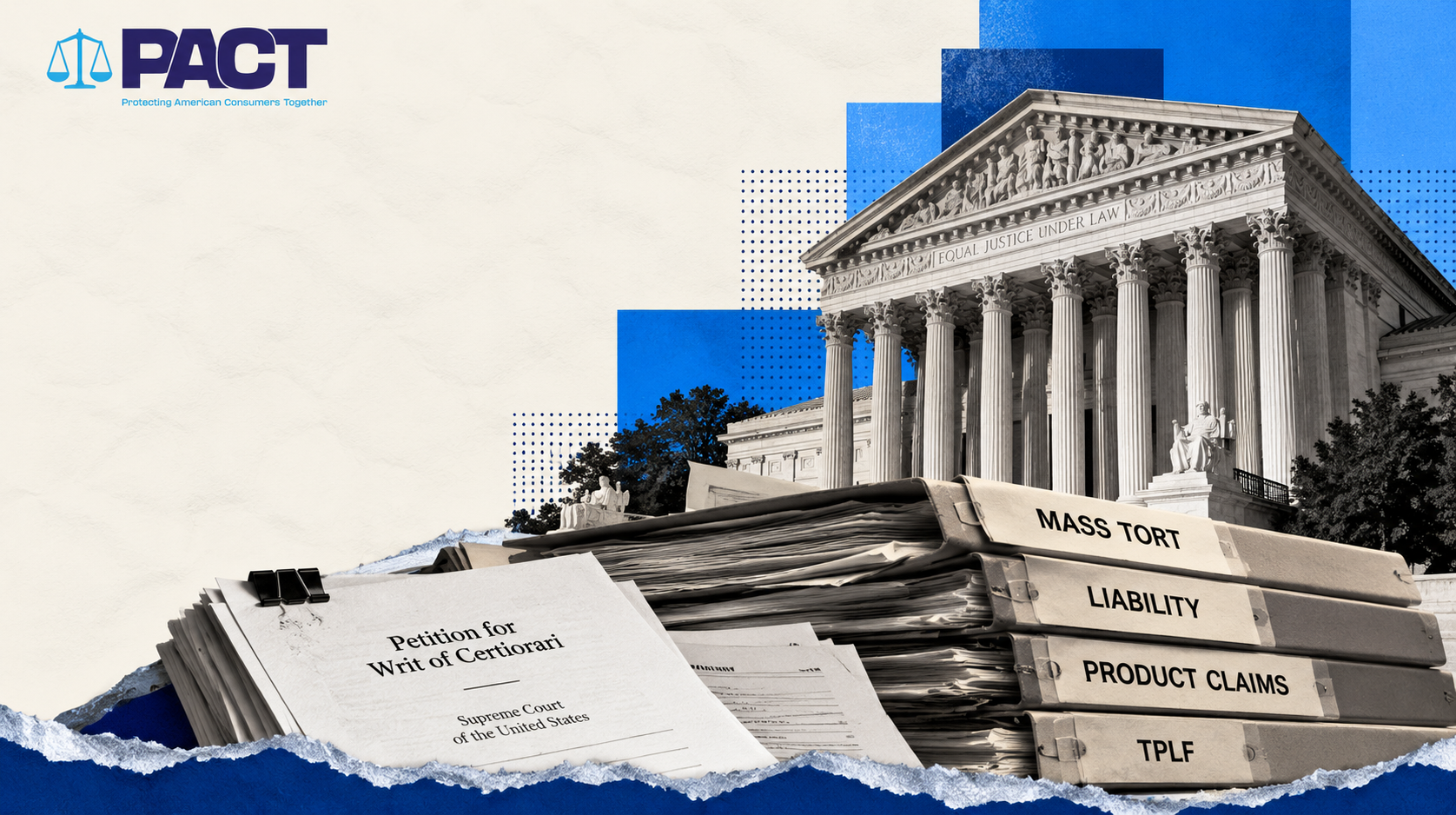
When the Supreme Court returns in October, the cases on its docket will remind every American of a crisis hiding in plain sight. Legal commentator Horace Cooper put it directly in Fox News this week:
"Reform is not about protecting wrongdoers. It is about preventing an aggressive lawsuit economy from becoming another hidden cost American families are forced to absorb."
We've seen these rising costs time and time again, showing how they drive up auto insurance, hollow out small businesses, and price families out of basic coverage.
Cooper goes on to highlight just how far attorneys will push the boundaries of the law. They do this not to deliver justice, but to generate the kind of massive fee awards that have made billboard lawyers some of the wealthiest participants in the American economy.
All across the country here's a growing wave of large-scale lawsuit campaigns in lower courts targeting ultra-processed foods, infant formula manufacturers, and fire truck makers, each one testing a new theory of liability. These lawsuits are all heading to the Supreme Court.
Beyond the high court, a wave of emerging mass litigation campaigns is flooding lower courts. Trial lawyers are treating these venues like testing grounds, tossing out new legal theories against manufacturers to see what sticks. Even when cases lack strong evidence, the sheer volume of claims creates immense pressure for industry-wide settlements. As Cooper notes:
"When liability expands, businesses must account for greater legal exposure through higher insurance premiums and compliance costs as well as reduced investment. Those expenses can ultimately become a tax that increases consumer prices and the cost of goods and services purchased by taxpayers."
Ultimately, consumers end up footing the bill.
This is the cycle that needs reform: no-fault laws and lacking oversight create structural incentives to over-diagnose, over-treat, and over-bill, inflating settlements and premiums for everyone. Third-party litigation funding supercharges the problem, funneling outside capital into campaigns with little transparency and less accountability.
The good news is that lawsuit abuse reform works. Florida's commonsense legislation cut auto insurance rates by 6.5% on average among the state's five largest insurers, and litigation over auto glass dropped 90% in a single year. Georgia passed sweeping lawsuit abuse reforms and was removed from the "Judicial Hellholes" list for the first time in years.
Cooper's prescription is straightforward:
"Greater transparency around litigation funding and government contingency-fee arrangements, along with stronger screening of weak causation theories, can preserve legitimate claims while making abuse harder to sustain."
Lawmakers at every level should act now, before these costs become further entrenched in the economy and harder to dislodge. It's time for commonsense reform; it's time to protect consumers from the abusive system of lawsuit abuse.