
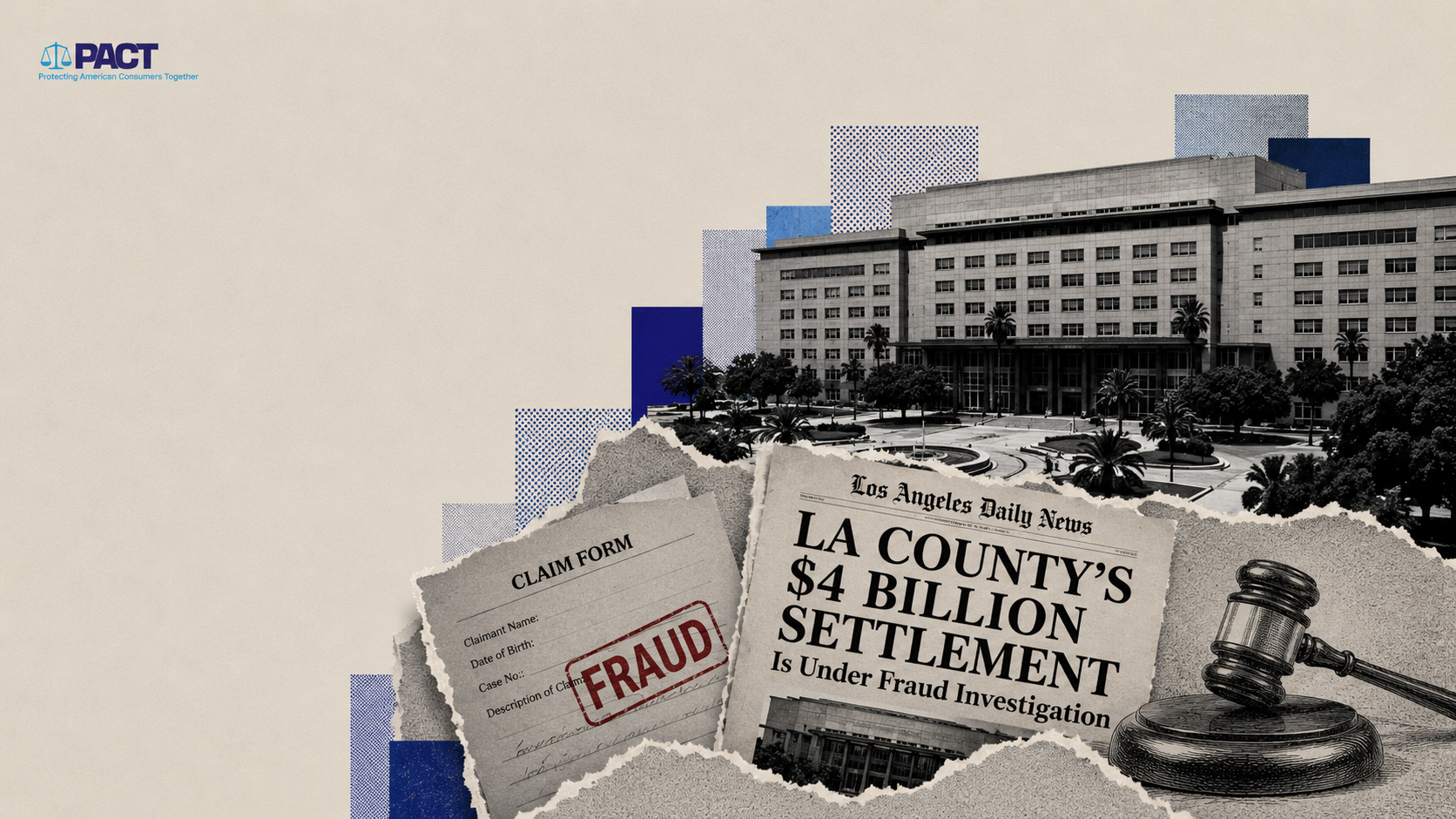
The largest sex abuse settlement in American history is also shaping up to potentially be one of the most alarming examples of legal fraud this country has ever seen. Los Angeles County approved a $4 billion settlement to resolve thousands of claims of childhood sexual abuse in county-run juvenile facilities and foster homes. But LA County District Attorney Nathan Hochman has now alleged that fraud indicators exist in up to 80 percent of the 10,800 claims reviewed by his office. That is potentially $3 billion in fraudulent payouts, and the first $600 million distribution has already gone out the door.
In a recent interview, Hochman described going before a civil court judge to request a six-month hold on payments precisely because of what his office found. The judge denied the request, citing the county’s risk mitigation rationale for proceeding. But Hochman made clear where he stood. As he put it directly:
“I actually had an adverse position, interestingly, to county counsel because I said, look, I’m all about looking at fraud. We want to actually stand for the true victims of child sex abuse and put these fraudsters, and these fraudsters can literally number in the thousands. They don’t only include the claimants. They go all the way up to the people who recruited them for law firms and the lawyers and the law firms themselves. So I said to the judge, give me six months. Just temporarily halt the first distribution of payments. Let us do our job. We’ll come back with indictments or whatever kind of criminal charges we do.”
That pipeline Hochman describes, from recruited claimants to the law firms at the top, is one that has been playing out in public view for months. In October 2025, the Los Angeles Times found that nine of Downtown LA Law Group’s clients who filed sex abuse claims against the county said recruiters paid them to join the lawsuits, including four who said they were told to fabricate claims entirely. Former case managers told the Times they were encouraged to push clients toward surgery and were sometimes financially rewarded when clients agreed. One internal message reviewed by the Times quoted a firm partner telling staff: “Our sx numbers for the month of May were very low… Many were unable to produce even a single procedure… this is not acceptable.” Former client Jacqueline McClelland, who was promised what she called “lottery money” after a slip-and-fall injury, ultimately watched the firm take 46 percent of her settlement while she was left fighting in court for whatever remained, telling a judge: “Downtown LA Law just gave me to the wolves.”
A December 2025 investigation by the Los Angeles Times went further, finding that private investors had begun treating the settlement as an investment opportunity, with LA County Supervisor Kathryn Barger describing the situation plainly: “I’m getting calls from the East Coast asking me if people should invest in bankrupting L.A. County. I understand people want to make money, but I feel like this is so predatory.”
Another Times investigation found that more than 60 Downtown LA Law Group clients had medical bills that exceeded their settlement amounts entirely, with court records showing attorneys taking in some cases more than three-quarters of a settlement before a single dollar reached the client who had actually been harmed.
This is not a California problem. It is a national one. Nearly identical fraud ecosystems have emerged in New York, Louisiana, Georgia, and Texas, where runners recruit victims, law firms steer clients to affiliated medical providers, litigation funders charge usurious interest rates on settlement loans, and the actual injured person ends up with a fraction of any award. In one documented New York case, a plaintiff who won a $2 million judgment ended up owing more than $5 million to litigation funding companies by the time her case closed. She passed away shortly after.
The DA’s investigation is ongoing, and Hochman has signaled he intends to return to court with criminal cases in hand to stop future distributions to fraudulent claimants. That is exactly the kind of accountability that real victims deserve, and that a broken system has too long denied them.
Policymakers at every level, in California and across the country, must take action. That means requiring transparency in third-party litigation funding agreements, cracking down on paid client recruitment, prohibiting attorney referral arrangements with medical providers that create financial conflicts of interest, and capping attorney fees so that clients, not law firms, keep the majority of what they are owed. Real victims of real abuse deserve justice. They cannot afford to keep competing for it against a pipeline of fraud that runs from the street all the way to the settlement table.