
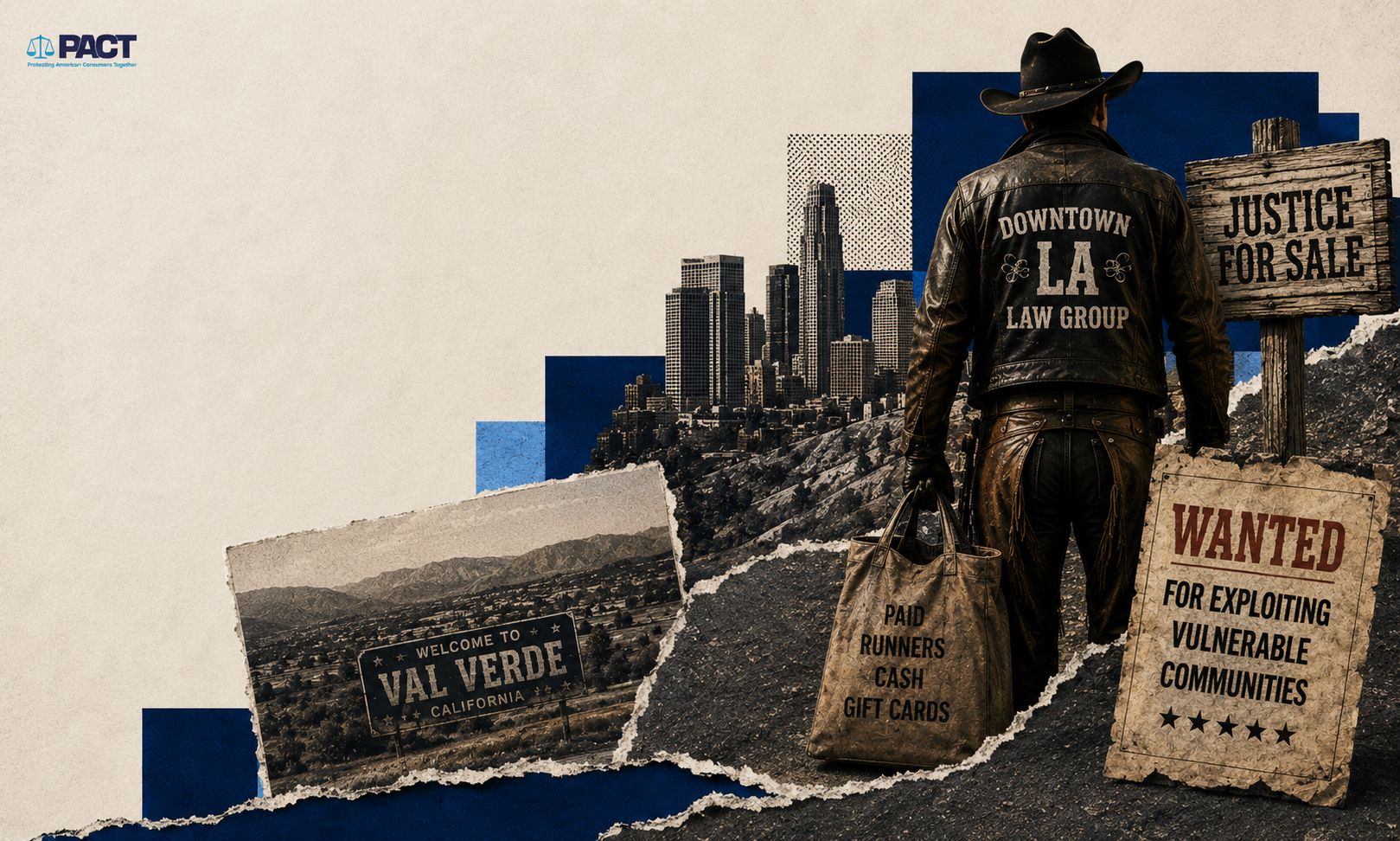
When a man in a cowboy hat and leather chaps began approaching residents of Val Verde, California, a tiny foothill community of 3,000 people already gasping from the toxic fumes of the neighboring Chiquita Canyon landfill, nobody recognized him. That was by design. The Los Angeles Times has the story.
According to a State Bar complaint filed by local attorney Oshea Orchid, the self-styled cowboy “admitted he was an actor and that the DTLA Law Group had paid him $5,000 to drive from Las Vegas, put him up in a hotel, given him Western attire and directed him to pretend to be a local cowboy to solicit residents of Val Verde.” His mission: sign up plaintiffs for Downtown LA Law Group, the same firm now under criminal investigation by the Los Angeles County District Attorney. The brown leather chaps he left behind are still stuffed in Orchid’s office, a fitting symbol of a scheme that left real victims worse off than it found them.
This is not an isolated incident. It is a pattern.
Downtown LA Law Group has repeatedly turned the legal system into a profit machine at the expense of the very people it claims to serve. In the firm’s most notorious case, the Los Angeles Times reported that nine DTLA clients who filed sex abuse claims against L.A. County “said recruiters paid them to file a lawsuit, including four who said they were told to fabricate claims.” A former DTLA paralegal filed her own lawsuit alleging the firm engaged in “illegal solicitation, as well as deceptive and unethical practices aimed at persuading individuals to become clients through misrepresentations.” Former clients reported being pressured into unnecessary surgeries to inflate settlement values, with one internal firm message telling staff that low surgery numbers were “not acceptable.”
One client, Jacqueline McClelland, told the Times she was promised “lottery money” after a slip-and-fall, only to watch DTLA take 46% of her $350,000 settlement, far less than her medical bills, leaving her, in her own words, handed “to the wolves.”
In Val Verde, the same playbook unfolded on a community that had spent years begging any law firm to take their case. Residents described recruiters handing out cash, gift cards, and barbecue in exchange for signatures on what many believed were community petitions, not lawsuit retainer agreements entitling DTLA to at least 40% of any future payout. “We’re poor,” one resident told the Times. “If someone offers you $20 … and they barbecue for you and they’re buying you beers, why not?” Retired farmworker Salvador Yoguez, who speaks only Spanish, said he had been drinking when a group of young men followed him to his car demanding his name and ID. He and his wife, Delia, said they were unaware DTLA had filed lawsuits on their behalf at all.
The consequences for the broader Chiquita Canyon litigation are now severe. Attorneys for the landfill owners cited DTLA’s conduct this spring, arguing the lawsuits may be “infected with lawyer misconduct or even criminal activity that has caused the filing of fraudulent claims.” Thousands of legitimate claimants, people who have suffered real harm from a real environmental disaster, now face the prospect of their cases being tainted by a firm that treated a suffering community as a source of billable plaintiffs.
This is how the current system fails consumers, and why there is such a need for lawsuit abuse reform. When taxpayer money, opaque capital, and mass-market client recruitment collide, the system can veer from justice to extraction.
Commonsense reforms, including banning paid runners and fee transparency would go a long way toward preventing the next cowboy from riding into the next Val Verde. Lawmakers and regulators cannot allow firms like Downtown LA Law Group to keep treating vulnerable communities as hunting grounds. It is time to protect real victims, not the firms that exploit them.