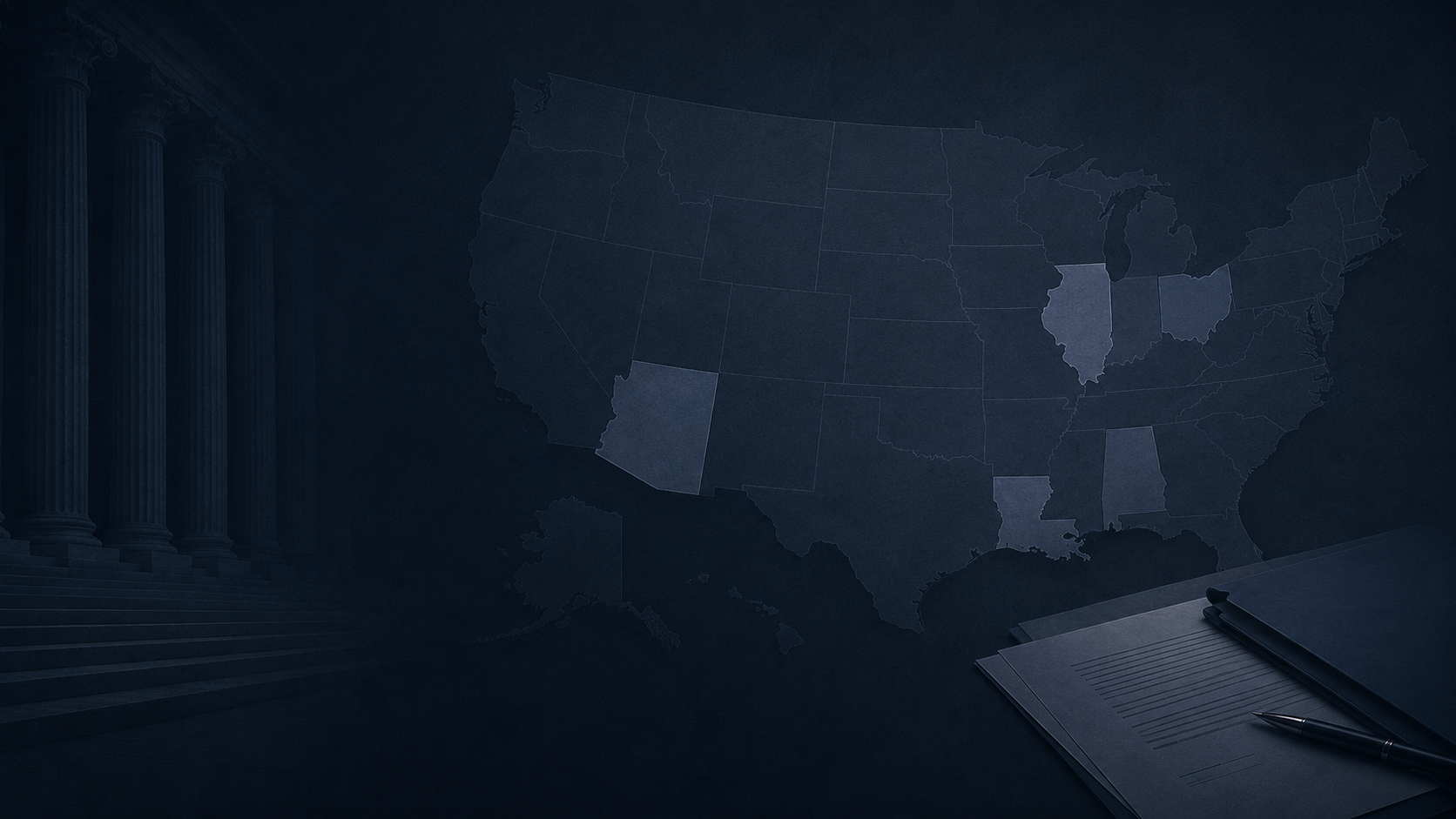
Across the country, a quiet but consequential reform movement is gaining ground. State by state, lawmakers and courts are demanding something long overdue from the secretive world of third-party litigation funding (TPLF): transparency. The latest milestone comes from Michigan, where the state House passed landmark disclosure legislation on a bipartisan vote. But Michigan is far from alone. From Louisiana to Arizona, Georgia to Oklahoma, the message is clear: the days of shadow financing in America’s courtrooms are numbered.
Third-party litigation funding is a $15.2 billion industry in which outside investors, sometimes foreign entities, sometimes Wall Street firms, bankroll lawsuits in exchange for a cut of any settlement or judgment. As we have documented repeatedly, these arrangements too often leave the injured plaintiff as the last one paid, trapped in high-interest debt while funders and attorneys collect the lion’s share of any recovery. Without mandatory disclosure, judges, defendants, and even plaintiffs themselves are frequently unaware that an outside financial interest is quietly shaping their case. The result is a system that extends litigation, inflates damages, and puts profit above justice. In a growing number of states, that system is finally being confronted.
Michigan
The most recent breakthrough came in Michigan, where the State House passed HB 5281 on May 14, 2026, by a bipartisan vote of 60 to 45. According to the Michigan Chamber of Commerce, the bill requires funders to register and disclose their involvement in litigation, prohibits them from influencing case outcomes or settlement decisions, caps the share of any award they can collect, and bans foreign adversaries from funding Michigan lawsuits. The Chamber noted that the current lack of oversight costs Michigan families an estimated $3,000 per household in hidden, elevated costs while the state loses out on nearly 100,000 job opportunities. The bill now moves to the Senate.
Oklahoma
Oklahoma moved swiftly. Governor Kevin Stitt signed House Bill 2619, the Foreign Litigation Funding Prevention Act, into law on May 23, 2025. As confirmed by the Oklahoma House of Representatives, the law requires commercial litigation funding agreements to be disclosed during litigation proceedings and mandates disclosure of whether a foreign government has any financial stake in the agreement. Rep. Erick Harris stated: “It is essential that we preserve the sanctity of our courts and keep them free from corruption by foreign powers seeking to manipulate outcomes for their own gain.” The law took effect November 1, 2025.
Georgia: Registration Now Required
In Georgia, a state on the forefront of protecting consumers, Governor Brian Kemp signed Senate Bill 69 into law on April 21, 2025. The Georgia Department of Banking and Finance is now actively processing registration applications for litigation financiers under the new law. SB 69 requires all litigation financing companies to register with the Department, creates a consumer disclosure regime, restricts foreign ownership of litigation financiers, and makes funder involvement discoverable in civil cases. Mandatory registration took effect January 1, 2026. Combined with Georgia’s broader SB 68 tort reforms passed in the same session, the state has positioned itself as a national model for comprehensive legal reform.
Arizona: The First State Court in America to Act
Arizona achieved a landmark of its own when the state Supreme Court adopted an amendment to the rules of civil procedure requiring disclosure of TPLF agreements in all civil cases, effective January 1, 2026. According to the Arizona Chamber of Commerce, this was the first time any state court in the country had moved to increase TPLF transparency through a court rule. Arizona also enacted S.B. 1215, which prohibits litigation funding by foreign entities of concern and bars funders from directing legal strategy or settlement decisions. Arizona Chamber President and CEO Danny Seiden put it plainly: “For too long, Arizona courtrooms were wide open to unscrupulous lenders trying to score a quick buck or to foreign funders scheming to gain an advantage against a competitor.”
Louisiana: Ahead of the Curve on TPLF Since 2024
Louisiana has also led the way in facing this lacking transparency. The state’s SB 355, the “Transparency and Limitations on Foreign Third-Party Litigation Funding” law, took effect August 1, 2024. The law requires foreign third-party funders to disclose detailed information to the Office of the Attorney General within 30 days of executing a funding agreement, including the names, addresses, and countries of origin of any foreign entities with a financial stake in the case. Non-compliance renders the funding agreement null and void, and violations are treated as deceptive and unfair trade practices. Funders are prohibited from directing or influencing any aspect of the litigation or settlement, and the Attorney General must report annually to the legislature on foreign involvement in litigation financing.
The momentum is real and the need is urgent. Third-party litigation funders have operated in the shadows for too long, quietly enriching themselves while injured plaintiffs walk away with a fraction of their recovery. Michigan, Oklahoma, Georgia, Arizona, and Louisiana are proving that commonsense reform is achievable and broadly supported when lawmakers put consumers first. Policymakers in every state where TPLF operates without oversight should follow their lead.